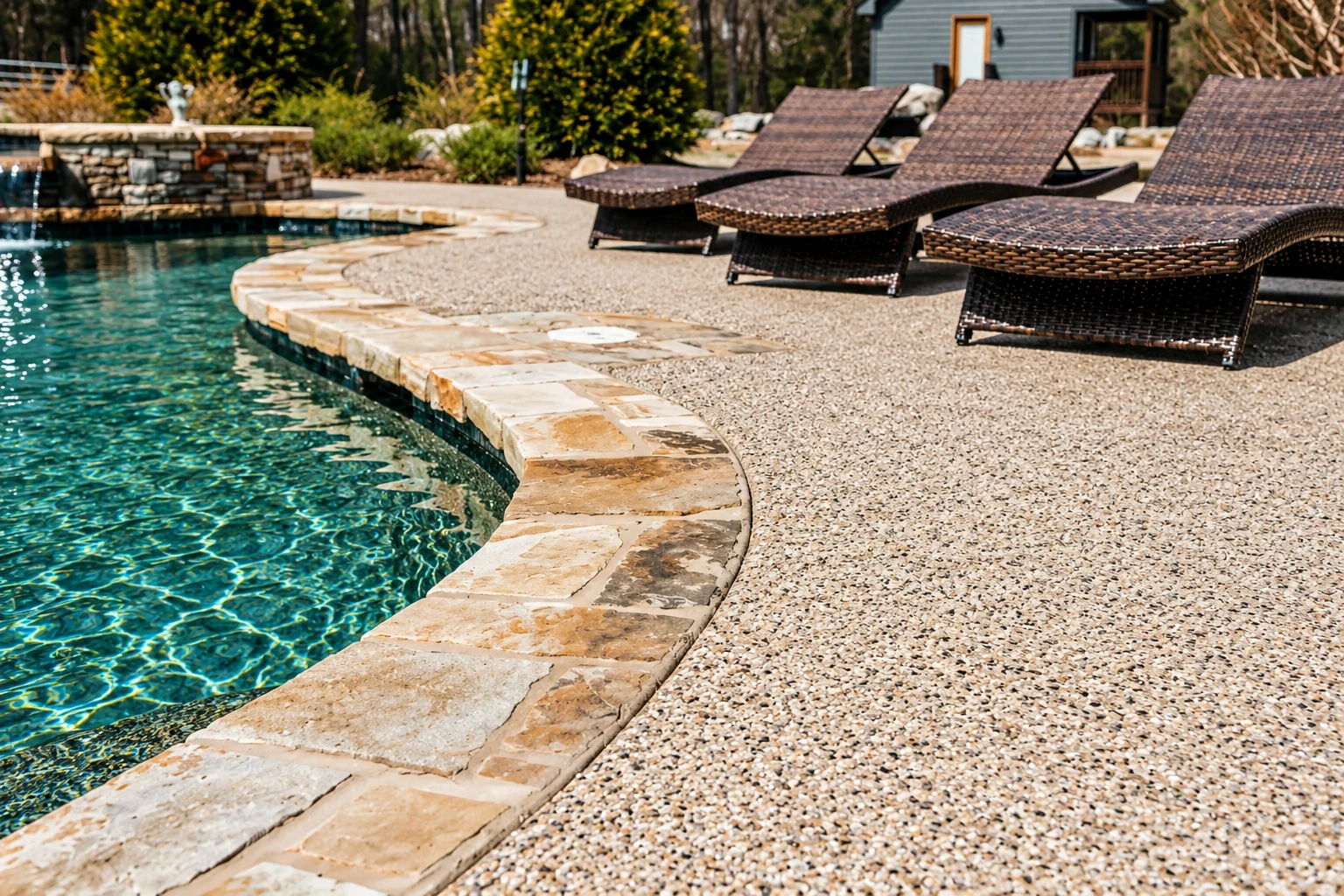
On a pool deck I look at grip first, since the surface will be wet most of the year, then at a shade that's easier on bare feet, and I plan the joints where the deck and pool come together. If the old deck is shifting, we deal with that before we talk about any new surface. That order puts your money into the things that decide how the deck holds up.
The part you'll never see matters most. We dig out and pack the subgrade, the ground the slab sits on, because a base that's only raked level settles right along with the dirt. When a budget gets tight, prep is usually the first thing people want to trim, and I'd rather scale back a fancy finish than the base. We also pour in the cooler part of the day, since midday heat can leave a weak, dusty top.
We cut control joints, shallow grooves that tell the slab where to crack, on time so cracks land where we chose and not across the middle. If the deck runs up to a back door or a raised patio, our concrete steps construction work keeps step heights even, and a screen room or pool house that needs a proper base falls under slab foundation building.